

Earth Day Celebration
Writing books in awe and celebration of Mother Earth!

With Earth Day freshly behind us and NASA’s Artemis program turning our attention back toward the Moon, it feels fitting to pause and reflect on this giant rock we call home. A gorgeous home alive with oceans, weather, creatures, and quiet miracles. Mother Earth has been captured so beautifully in picture books for generations. From towering forests to dry desert floors, from worlds beneath the waves to the clouds overhead, there is no shortage of wonder. And yet, so much of it goes unnoticed in the rush of daily life. https://www.earthday.org/
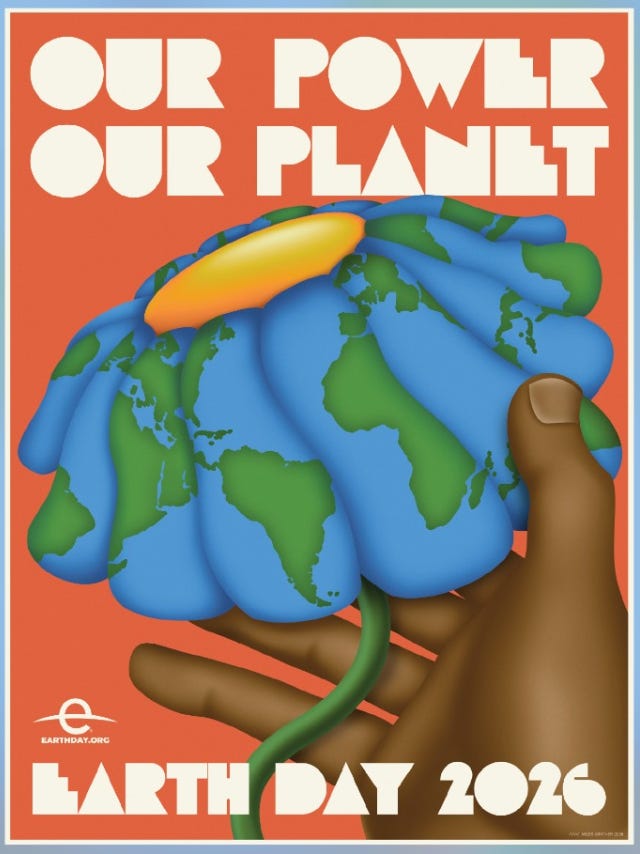
“It made sense to represent Earth as a flower being admired, held, and cared for by human hands….. The world is in all of our hands” — Miles Wintner (artist)
So, fellow Logliners: If you were to write a picture book about Mother Earth, what story would you tell to spark children’s sense of wonder and curiosity? Which part of the world would you bring to life so vividly that young readers would return to it again and again? And what lessons do you hope they carry with them after the final page?
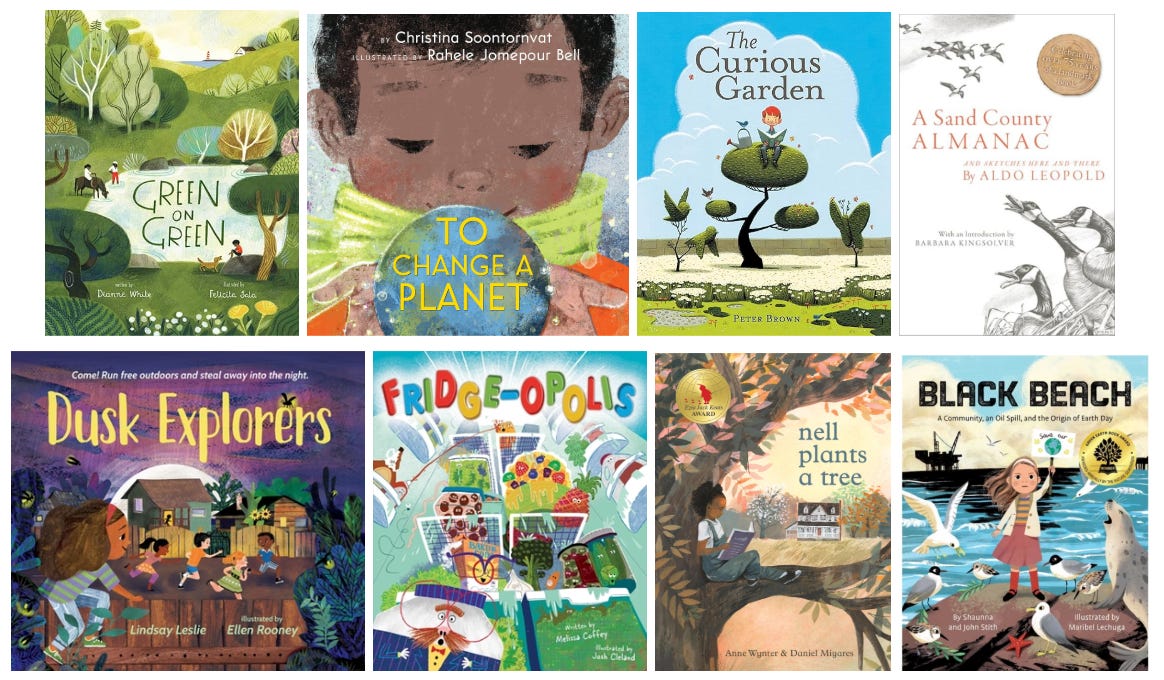
Anne: When I started drafting Nell Plants a Tree, it didn’t start out as a story about trees - but I’m so glad I landed on that theme! I’ve always loved trees, and I think it’s so easy to take them for granted or pass them by without taking a closer look. I’ve always hoped the book would make readers wonder about the trees around them and consider how those trees came to be. My biggest wish for the book is that it will inspire kids to plant trees and imagine what impact those trees will have in the future.
Lindsay: I wrote Dusk Explorers about the beauty of dusk, and the enjoyment to be had playing outdoors during that time. Think fireflies, leapfrog, and toads! What devastates me are some of the reviews saying this book couldn’t happen nowadays. I’m wondering why the heck not? Parents/guardians/older siblings can go out with kids and watch (and even participate) as they explore and enjoy the setting sun. I wrote this book to call for kids to put down the electronics, come back outside, and soak it all in.
Meghan: One of the classes that I took in school that was paramount to my love for nature was an Animal Studies elective at Kealing Junior High in the late 1990s. We were tasked with catching, identifying, and pinning an enormous insect collection. We also learned and were tested on identifying native birds and frogs by their appearance and/or calls. Getting to know these different species so intimately as a young person allowed me to feel a closeness to the natural world around me that has only grown over time. I think establishing a close relationship between young people and their natural surroundings early on is paramount to creating a community that cares about the environment.
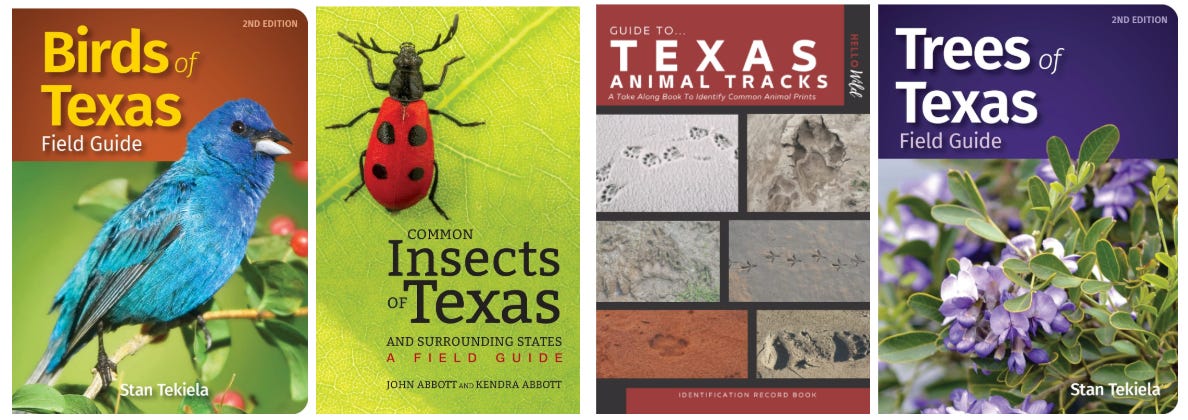
I love a good field guide! Even when our phones can do a good job identifying, these guides teach how to critically think about identification.
As for Artemis II: My aviation family was glued to the mission like the rest of the world! I loved studying space as a kid, but more than that, I was crazy about aviation. Last week my husband (a pilot for Southwest Airlines) presented his first in a multi-week series to a class of fifth graders through the Southwest Airlines Adopt-a-Pilot program. He’s done this for many years as a way to bring practical physics and aviation science into the classroom and inspire the next generation of aviators. I would have died for the opportunity to have this exposure as an eleven-year-old. If you’re interested in this program for your classroom, please reach out to apply to Adopt-a-Pilot. Registration is usually open September 1-November 30.
Kari: I would really love to write about birds - to give me an excuse to make time for birding. Like Meghan, I had a super cool class that broadened my knowledge of the outside world and really fostered my appreciation of nature. One of the class requirements was to identify the birds native to Kansas. We took a class trip to Nebraska to watch over half a million sandhill cranes during their spring migration. I’m still in contact with this teacher (my high school biology teacher) - he’s actually an expert reader for the Butt Or Face? Series. (Thanks, Mr. Wachholz!)
Melissa: My debut, FRIDGE-OPOLIS, was all about food waste, composting and recycling. I specifically chose to focus on this angle because we waste up to 40% of our food and while food is the #1 thing dumped in landfills, we often don’t think of it as pollution. I wanted to introduce the topic in a humorous way because all of us through our daily choices can help Mother Earth. I tell kids they can start with their lunchboxes. Our daily habits add up.
Robyn: For my upcoming picture book, WIDE OPEN SPACES, I began by researching the real landscapes of America. The story takes readers on a journey from the desert to the mountains, across plains and rivers, and finally to the beach. My goal was to give readers the space to breathe and take in the scenery. In this book, as with any picture book I write, I keep returning to the question: “So what?” i.e. “Why should the reader care?” Beyond inviting repeated readings, my hope is that it ignites a lasting sense of curiosity. With WIDE OPEN SPACES, I want children to take a deeper dive and explore the places the characters visit and discover more about the wildlife and ecosystems that shape them.
The Logliner’s Recommended Reads:
News & updates:
A quick reminder of all the amazing books on the way:
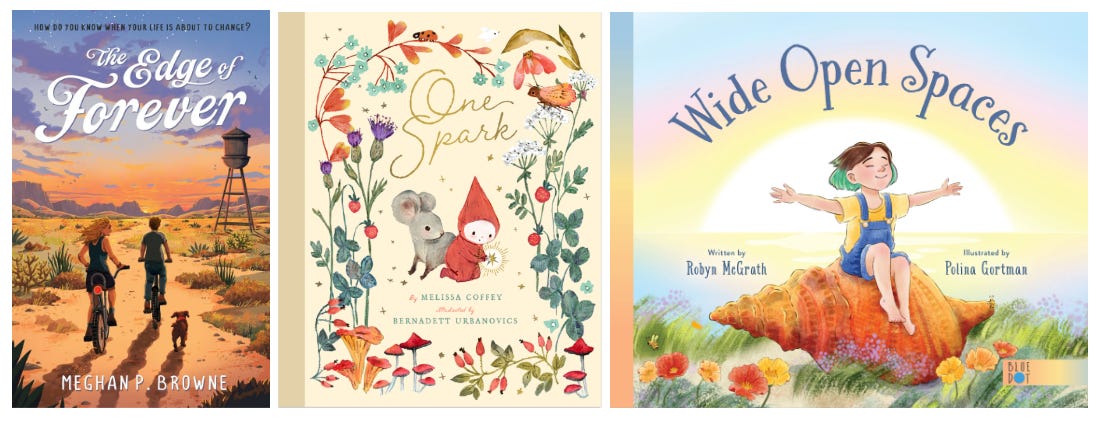
Meghan P. Browne’s THE EDGE OF FOREVER launches May 12th!
Robyn McGrath’s WIDE OPEN SPACES launches May 12th!
Melissa Coffey’s ONE SPARK launches September 8th!
Readers, we’d love to know:
Is there a particular book, activity, expert classroom guest, or field trip that you have experienced as a student, educator, or parent that was particularly inspirational to you?